
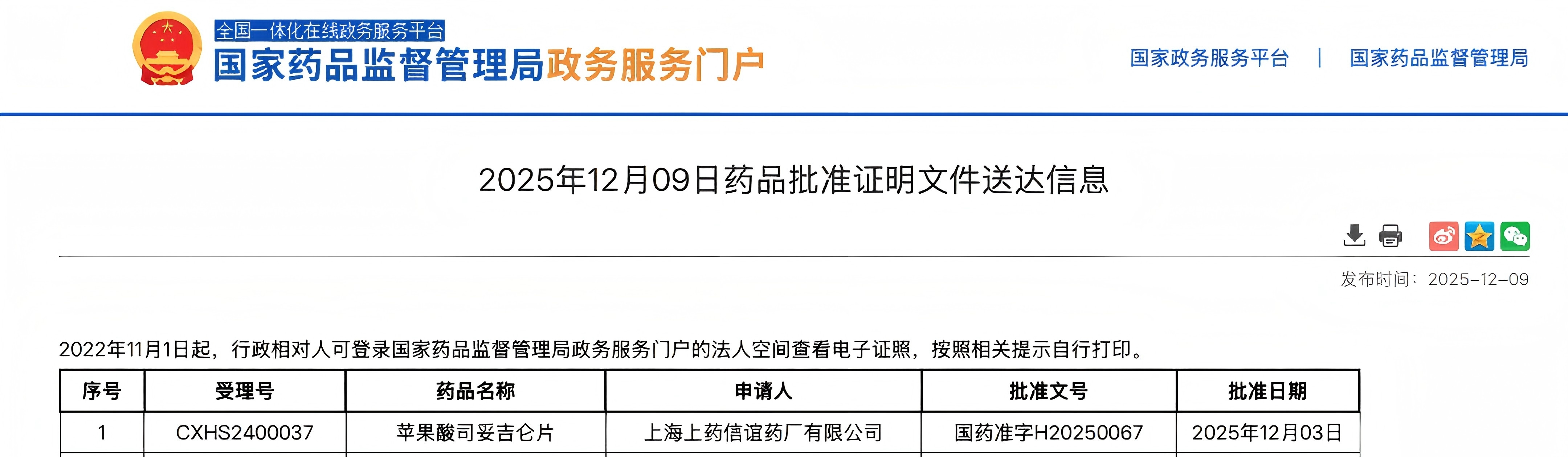
In December 2025, Shanghai Pharmaceuticals' Class 1 innovative drug Sitogliflozin Malate Tablets (R&D code: SPH3127) received NMPA approval for the treatment of essential hypertension. The professional drug‑drug interaction (DDI) research services provided by Chengdu West China Clinical Research Center Co., Ltd. (hereinafter referred to as "WCCR") served as a critical clinical support for the successful approval of this drug.
SPH3127 is a next‑generation oral renin inhibitor jointly developed by Shanghai Pharmaceuticals and Japan's Mitsubishi Tanabe Pharma, aiming to overcome the low bioavailability and complex synthesis of first‑generation drugs.
Drug‑drug interaction (DDI) studies are a core component in assessing the safety and clinical applicability of new drugs, with value throughout the entire drug lifecycle. WCCR undertook the dedicated DDI study for SPH3127. Leveraging a robust clinical operation system and a professional team, we strictly followed international guidelines. Through systematic evaluation of pharmacokinetic changes when SPH3127 was co‑administered with probe drugs, we provided key scientific evidence for precise clinical dosing regimens. The value of DDI research is reflected in three aspects:
1. Ensuring Drug Safety and Avoiding Clinical Risks
DDI studies reveal the interaction mechanisms between SPH3127 and metabolic pathways such as the CYP450 enzyme system, clarifying potential conflicts with commonly co‑administered drugs like antihypertensives and anticoagulants. The pharmacokinetic data generated guide clinicians in developing individualized treatment plans, significantly reducing the incidence of adverse drug reactions.
2. Optimizing Combination Therapy and Enhancing Treatment Efficacy
DDI studies precisely identify synergistic or antagonistic effects between SPH3127 and specific drugs. For example, if co‑administration with a certain antihypertensive enhances efficacy, a more effective combination can be designed; conversely, if antagonism exists, co‑administration should be avoided or dosing schedules adjusted. This evidence‑based optimization improves patient adherence and clinical outcomes.
3. Supporting Regulatory Decisions and Accelerating Drug Approval
DDI data are crucial for regulatory review. Our DDI study provided a complete chain of metabolic interaction evidence for SPH3127, helping to define contraindications and precautions, and scientifically demonstrating the safety of co‑administration, thereby laying the foundation for approval. Moreover, such studies provide theoretical support for future indication expansion (e.g., combination therapy for cardiovascular diseases), extending the drug's lifecycle.
WCCR played a key bridging role in this process. Moving forward, we will continue to focus on the frontiers of clinical research, leveraging high‑quality medical and clinical operation services to upgrade DDI studies from "risk avoidance" to "value creation," and help bring innovative drug R&D outcomes to patients faster.